

Programming And Playground In Dothan, AL - The highest level of inclusive play
Kim Meeker, a past assistant director of Dothan Leisure Services in Dothan, AL, for over 2 decades, still possesses a sense of wonderment in discovering and creating something new.
“I’ve seen a lot, but I haven’t seen it all,” says Meeker. “In fact, I’m seeing new things all the time, and that is what keeps me going.”
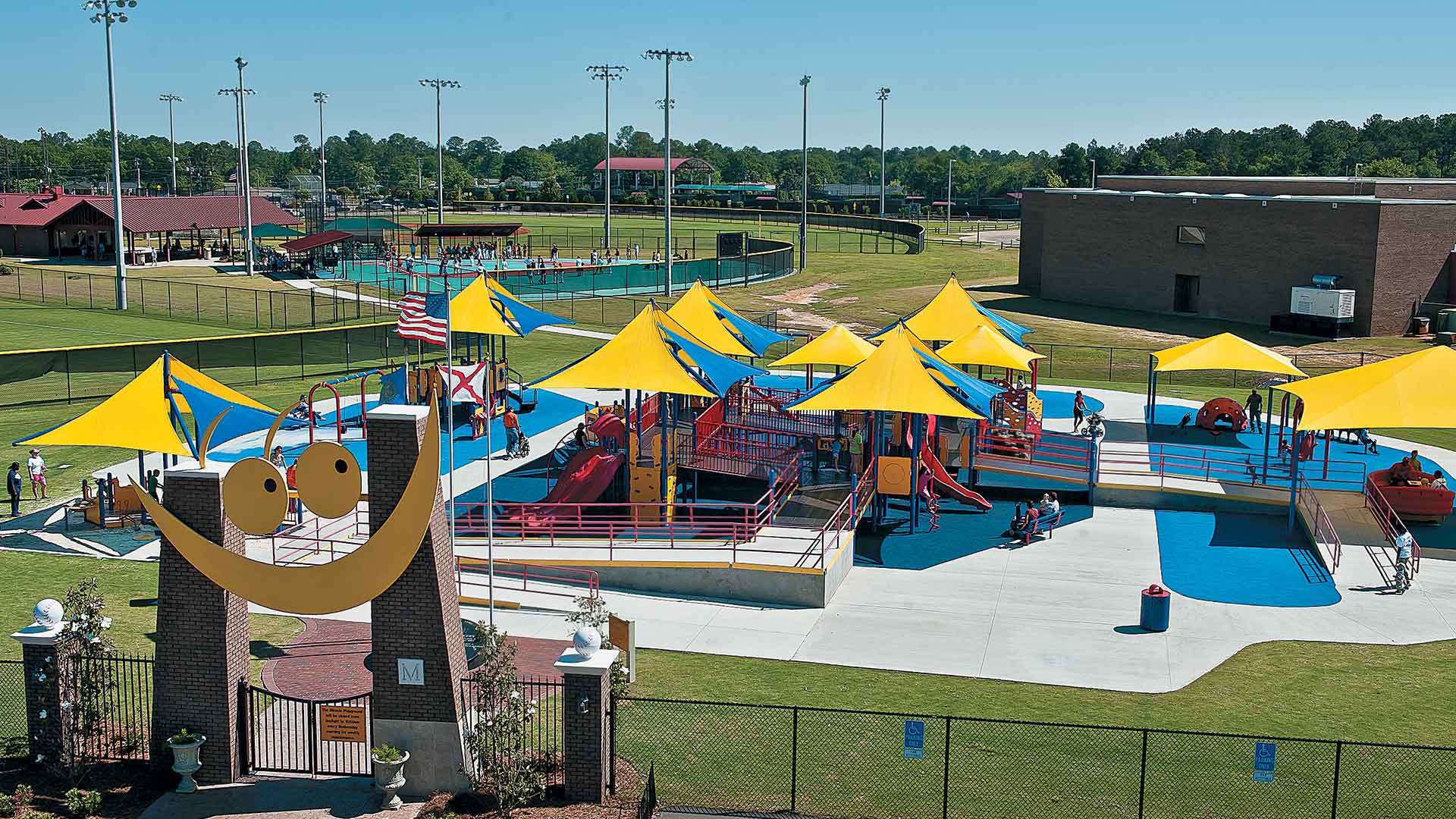
What’s kept Meeker going for the last few years has been the eye-opening process of designing, building, and programming Dothan’s Rotary Miracle Playground, one of more than 20 playgrounds in this city of 60,000. To tell the story, Meeker thinks back to 2008, just after the city had christened its new Miracle League Baseball Field.
“We had one dynamic parent of a special needs child who had a real vision for a Miracle League Ball Field,” recounts Meeker. “Her name was Melinda McClendon, and when she found out we had $350,000 in grant money for the ball field, she immediately dedicated herself to championing our cause. As the project’s emotional spearhead, she inspired our two Rotary Clubs to raise the balance of the $1.2 million required for the playground project.”
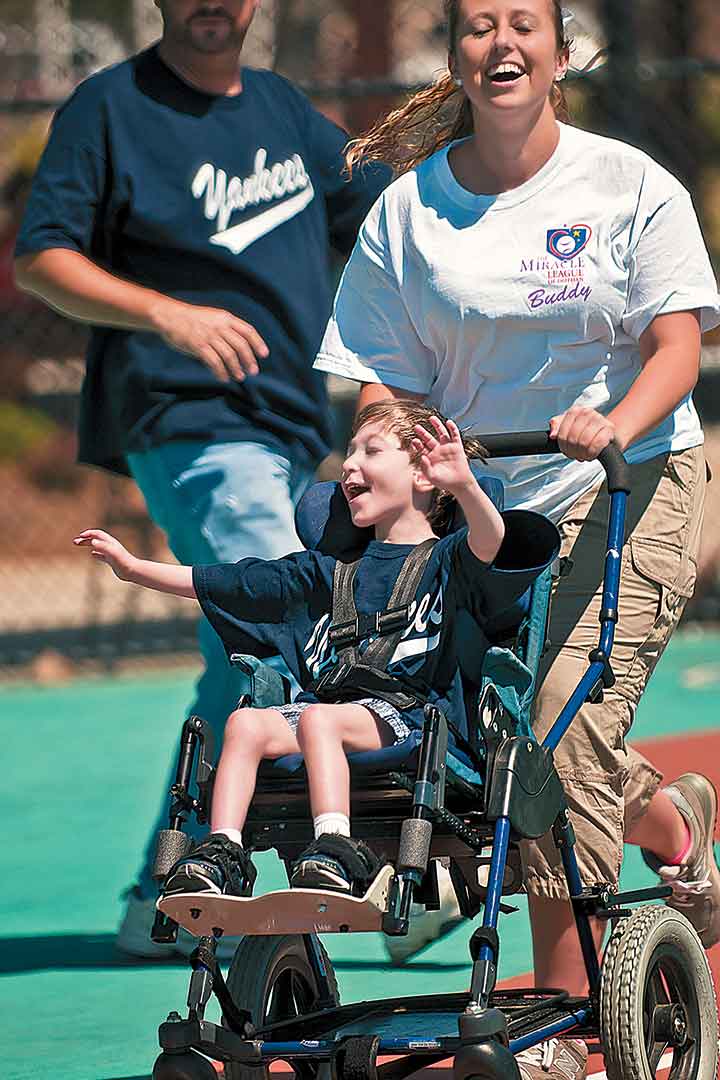
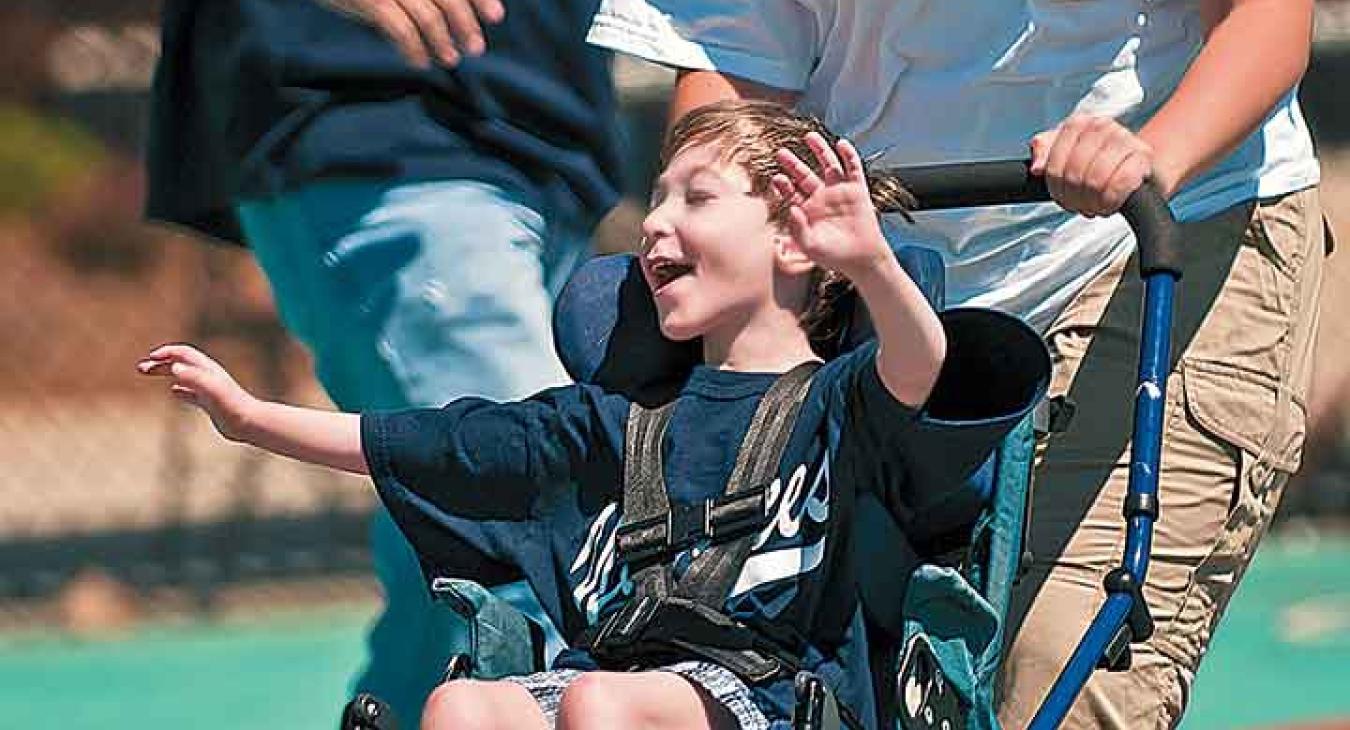
“I first brought the ball field project to the city years ago,” says McClendon. “My son, Buck, a special needs child, is now eight, but he was just six months old when I saw a program on the Today Show about Miracle League Ball Fields and brought it to the attention of the city managers. My whole family, including my other two sons, plays baseball, so I knew I was destined to help create a ball field for my special needs son.
Thanks to our fantastic Rotary Clubs, it took just a year and a half to raise more than a million dollars for the project.”
From Ball Field To Playground
Rotary Miracle Field was opened in the spring of 2008, and once again, McClendon was there to challenge the city to move onto the next phase.
“The idea of a Miracle League playground didn’t really come up until we were nearly finished installing the ball field,” says McClendon. “In fact, we had received a $10,000 donation from Oprah’s Big Give, so at the grand opening of the Field, we showcased that $10,000 as our seed money for the playground, which would be located adjacent to the ballpark.”
One big project was just flowing into another, and Kim Meeker and the experts from Dothan’s Therapeutic Recreation Division took it from there.
“About a year after the ball field was completed, Ronnie Dean, the head of the Rotary Club committee called me and said, ‘Kim, we’d like you to join us for a committee meeting to talk about that Miracle Playground,’” recalls Meeker, “It was in that meeting that they challenged me to begin work on Rotary Miracle Playground.
“Now I knew I didn’t have the knowledge to do this on my own,” recalls Meeker. “I’d been a certified playground safety inspector for 12 years and involved in creating playgrounds for a very long time, but I did not know how to design a fully inclusive, universally accessible playground. So, to help me envision what this playground could be, I recruited a consulting committee made up of parents, special educators, Leisure Services personnel, and volunteers from Rotary and our Therapeutic Recreation Division.
“We sent a Request For Proposal to several playground companies that the Miracle League knew were reputable, and at the same time, we made calls across the country to learn about the features and composition of other universally accessible playgrounds,” says Meeker.
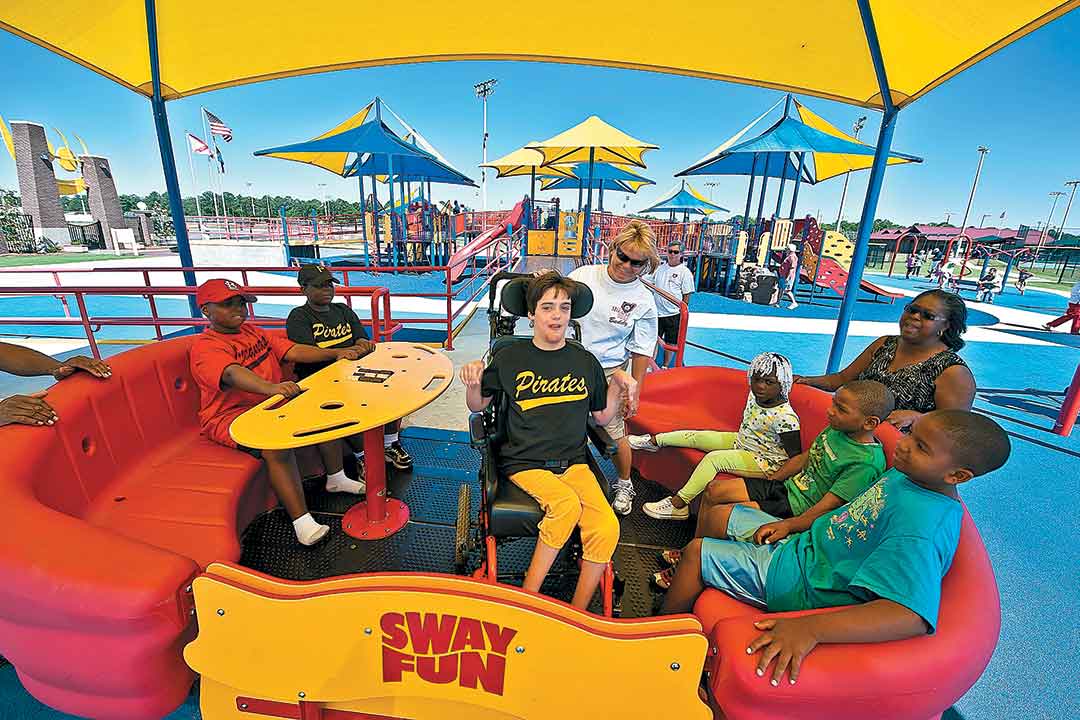
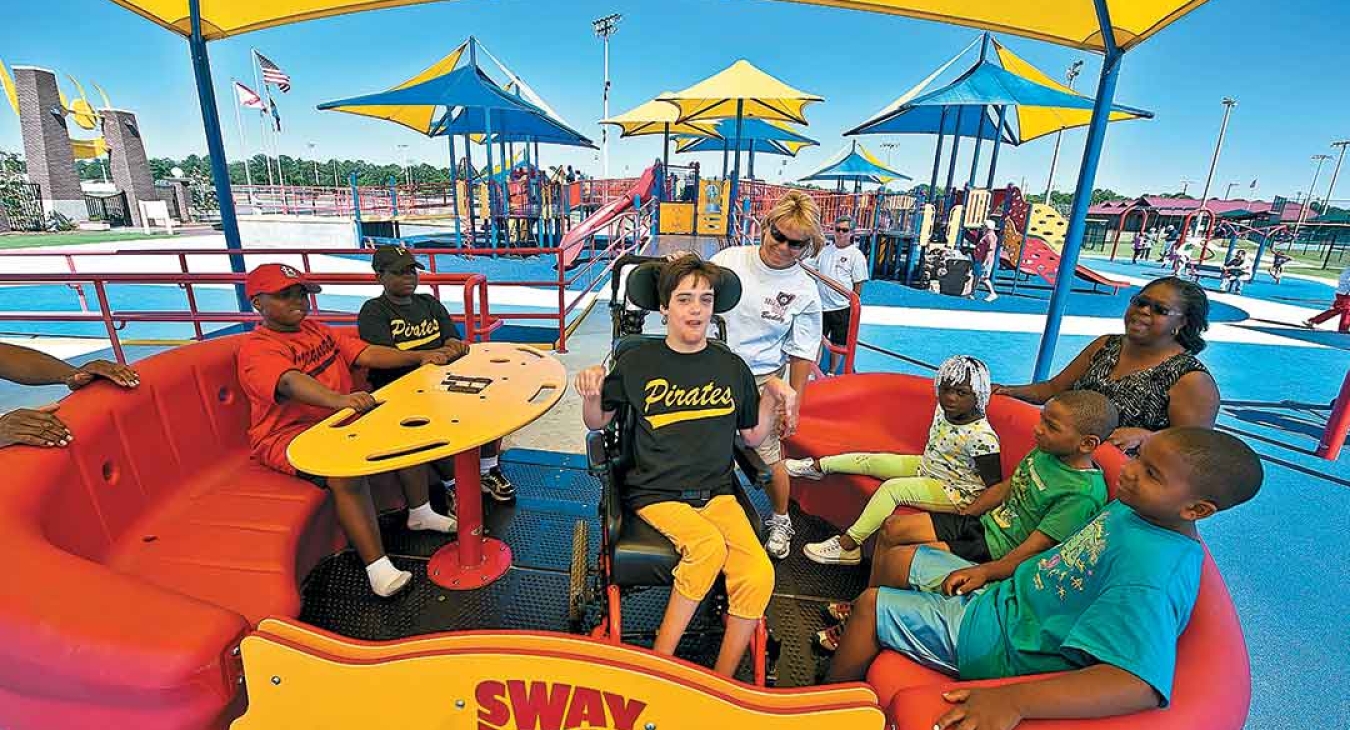
“Our goal was to come up with a playground design that would provide challenges for every child, regardless of their abilities. We weren’t going to put the playground over in a corner and say it is only for children with disabilities. We wanted the entire environment to be inclusive.”
Ultimately, the Rotary Club selected the equipment from Landscape Structures, a Minnesota-based playground company that had built several Miracle League playgrounds around the country. The total budget for the playground, including the safety surfacing and site preparation, was $600,000, of which the city could only contribute about $50,000 in in-kind costs. Once again, the Rotary Clubs said, “Let’s get this done.”
According to Melinda McClendon, the choice to work with Landscape Structures was based as much on their mindset as it was on their equipment. “The Rotary Club chose Landscape Structures because they had a long history of building successful Miracle League playgrounds, and because everyone thought that they had the best overall package,” says McClendon. “Moreover, they kind of took a mommy approach to the project. They demonstrated a heartfelt interest in not just the safety of the playground, but also in how each play component would help a child develop mentally and physically, and what elements the children would most enjoy.”
An enormous team of volunteers installed Dothan’s Rotary Miracle Playground in the spring of 2011. Soldiers from Fort Rucker, a nearby army installation, met at 6 a.m. with nearly 200 parents and Rotary volunteers and set out to build as much of the playground as possible in a single day. With the special safety surfacing and the posts for the playstructure already in place, they completed the entire playground by 9:30 that morning. It was a fantastic day during which the entire community gained a sense of pride and ownership in the playground.
Unintended Consequences
A short time after the playground was installed, Kim Meeker found out that having an inclusive playground didn’t mean that everyone was going to use the playground in an inclusive way.
“We had a universally accessible playground, but we noticed that at certain times it was not a good place for our special needs children to play,” says Meeker.
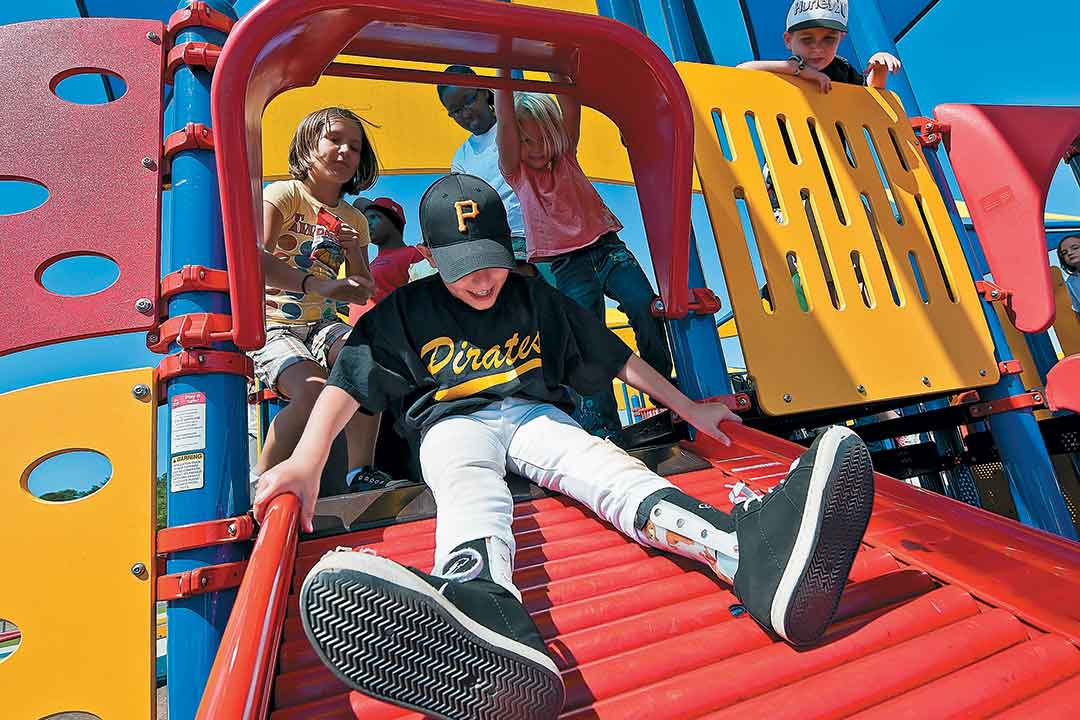
“A special needs child who might have limited mobility or might process things more slowly might want to use a slide, but three typically able kids would bump into that child and go down the slide before he or she ever got the chance to enjoy it. We saw that most of these children were not trying to be disrespectful, but they were often unaware of who these special needs children really were as individuals, as human beings. We found that the ‘inclusive’ part of play wasn’t working that well.”
Melinda McClendon saw the problem right away.
“The Miracle League playground is a phenomenal playground—the best playground any child has ever seen,” says McClendon. “But shortly after it opened, it became a hot spot for school buses and field trips, and hundreds of typically able kids were taking it over, often at the expense of the children with special needs.
“I was pretty selfish with this playground because I have a special needs child who is often called names on other playgrounds. So now we have created what we think will be a safe haven—the Rotary Miracle Playground—but you realize that the other kids are still calling your child names and not respecting their space. It was profoundly disheartening to many children and their parents.”
Meeker was determined to find a solution. “We immediately got together with Rotary and our playground committee and discussed solutions,” says Meeker. “And one of my first calls was to Jane Jenewein, our contact at Landscape Structures. She indicated that they had helped other communities deal with similar situations through their partnership with Shane’s Inspiration, one of the world leaders in inclusive play. She immediately laid out a plan to address these issues.”
Discovering How An Entire Community Could Play Inclusively
A short time later, Landscape Structures and Shane’s Inspiration arranged for Marnie Norris, program director at Shane’s, to teach the principles of inclusive play to the staff and volunteers of Dothan Leisure Services and host a “My Play Club” for families on the new playground.
“In August, we had our first My Play Club and I was incredibly impressed,” says Meeker. “The day before our Saturday event, Marnie Norris trained 45 staff and volunteers on how to interact with children and how to pair children with disabilities with typically able children and to be the play facilitator. Our goal was to educate children about the different kinds of abilities that will be found on our playground and show them all how to play together.
“The following day, our My Play Club event was spectacular,” recalls Meeker.
“We had stations around the playground where children could blow bubbles, listen and play music, get their faces painted, and decorate a visor. To make this first event manageable, we closed the playground to the general public for two hours and hosted approximately 80 children and 30 volunteers.
“Afterwards, we moved the children and volunteers to the nearby pavilion, and Marnie gave popsicles to all the children. She then began to pass the microphone around to various kids so that they could say what was fun today and what they most enjoyed doing. The whole thing took on a life of its own, and I really enjoyed seeing our therapeutic leaders spearheading the experience. It was a historic day when we opened the playground, but our first My Play Club was just as historic because that’s when we discovered how our entire community could use our playground.”
Moving forward, Meeker would like to host one My Play Club a month, gradually inviting more and more typically able children so they, too, can learn about the inclusive part of play.
“The more of these that we have, the more educated our community is going to become,” says Meeker. “But we have other initiatives planned, too. We would like to build an informational kiosk on the site that explains the theory of inclusive play and describes how each play event is best used in an inclusive manner. We are also planning to work with Shane’s Inspiration to bring inclusive play programming to local schools, so the children understand what we are trying to do before they arrive at the playground on a field trip. We want the knowledge and awareness to be there before the children step off the bus.”
McClendon agrees that this is the way to true inclusion. “I never wanted the playground to be exclusively for special needs children,” says McClendon. “That would have completely defeated the purpose. I want children who do not have special needs to want to play with my child, not because of his special needs, but in spite of his special needs. That’s the only way that they will ever know that he’s as normal as they are—just drop their pretenses and hang out with him. I know that this playground can achieve that.”
Add new comment