

Who Needs Signage? Everyone, and here's why!
Originally published 2003, "Today's Playground" • Updated October 2025
Playground signs and labels are more than decorative elements; they are vital safety tools that guide supervisors, alert caregivers to hazards, and reduce the risk of injury and liability. Over the years, playground signage has evolved alongside safety standards from the U.S. Consumer Product Safety Commission (CPSC), ASTM International, and ANSI. In this updated article, we revisit the importance of signage while preserving the personal stories that illustrate its real-world impact.
Not everyone believes signs and labels are necessary. The naysayers will say things like, “Forget the signs — I know how to watch my kids,” or, “Why bother? No one reads them anyway.” Some even joke, “My eight-year-old can watch my two-year-old just fine while I’m... well, you know.” But here’s the truth: signs and labels aren’t just good ideas — in many states, they’re required by law through the adoption of ASTM Standards and the CPSC Guidelines. There are parents and children who read them, understand them, and follow them. And there are always attorneys who will be looking for them when something goes wrong.
Legal Duty to Warn: The Importance of Clear Signage
Manufacturers and owners of public playground equipment have a clear and unavoidable “duty to warn” users about potential hazards. It’s not just a matter of good practice — it’s a cornerstone of product liability law. If an injury occurs and the danger wasn’t clearly communicated through proper signage or labels, the absence of that warning can become a critical factor in court.
“I’ve been in courtrooms where the first thing an attorney asked was, ‘Where was the warning label?’ And if you can’t answer that — you’re in trouble.”
This obligation extends to everyone involved — manufacturers, installers, and operators alike. A well-placed sign or label can demonstrate due diligence and adherence to ASTM and CPSC safety standards. Failing to include one, on the other hand, can imply negligence, especially when an injury could have been reasonably anticipated.
“Over the years, I’ve reviewed a lot of accident reports. Not once have I seen an inspector pass a playground that was missing its required signs and labels — and for good reason. Those small details become big evidence when lawyers start asking questions.”
Signs serve a dual purpose: they inform users about safe play behavior and act as documentation that the owner took reasonable steps to warn against foreseeable misuse. When the standards call for supervision or age separation, those warnings should be clearly visible and permanently affixed.
“I’ve seen too many playgrounds where the only thing left of a warning label is the adhesive. The courts don’t care if the sign was there five years ago — they care if it’s there the day the injury happens.”
In short, signage and labeling aren’t optional niceties — they’re your best line of defense. The cost of maintaining them is minimal compared to the cost of a single lawsuit.
Types of Playground Signs and Labels
Playgrounds benefit from multiple types of signs, each serving a specific safety purpose:
- Age-Appropriate Use Labels
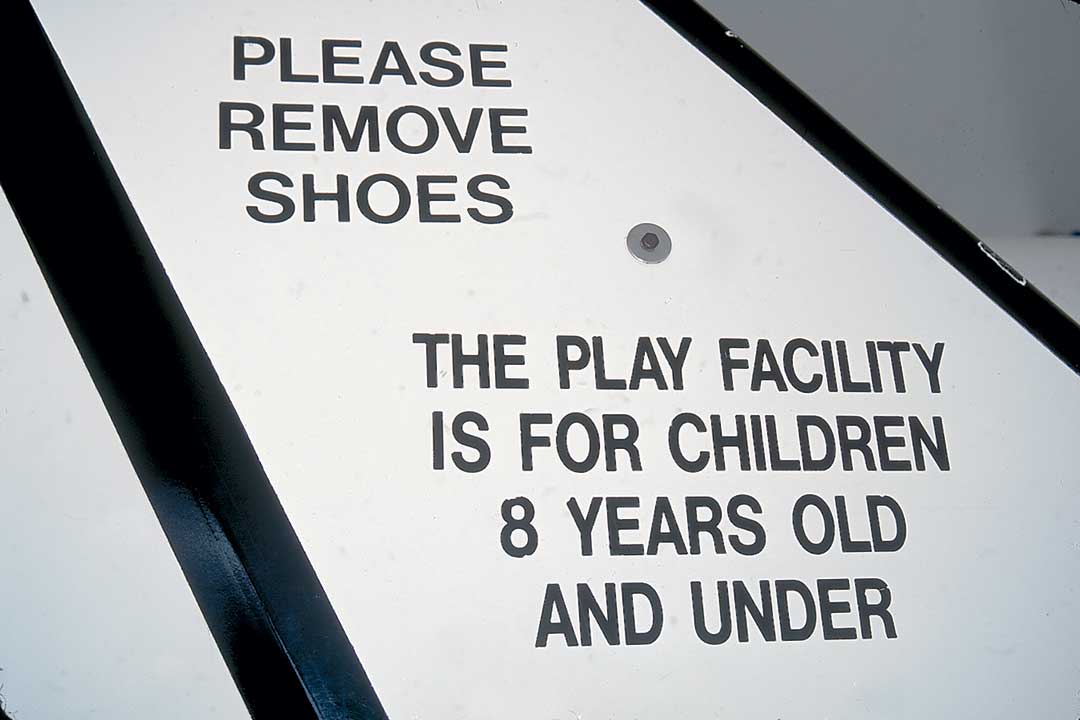
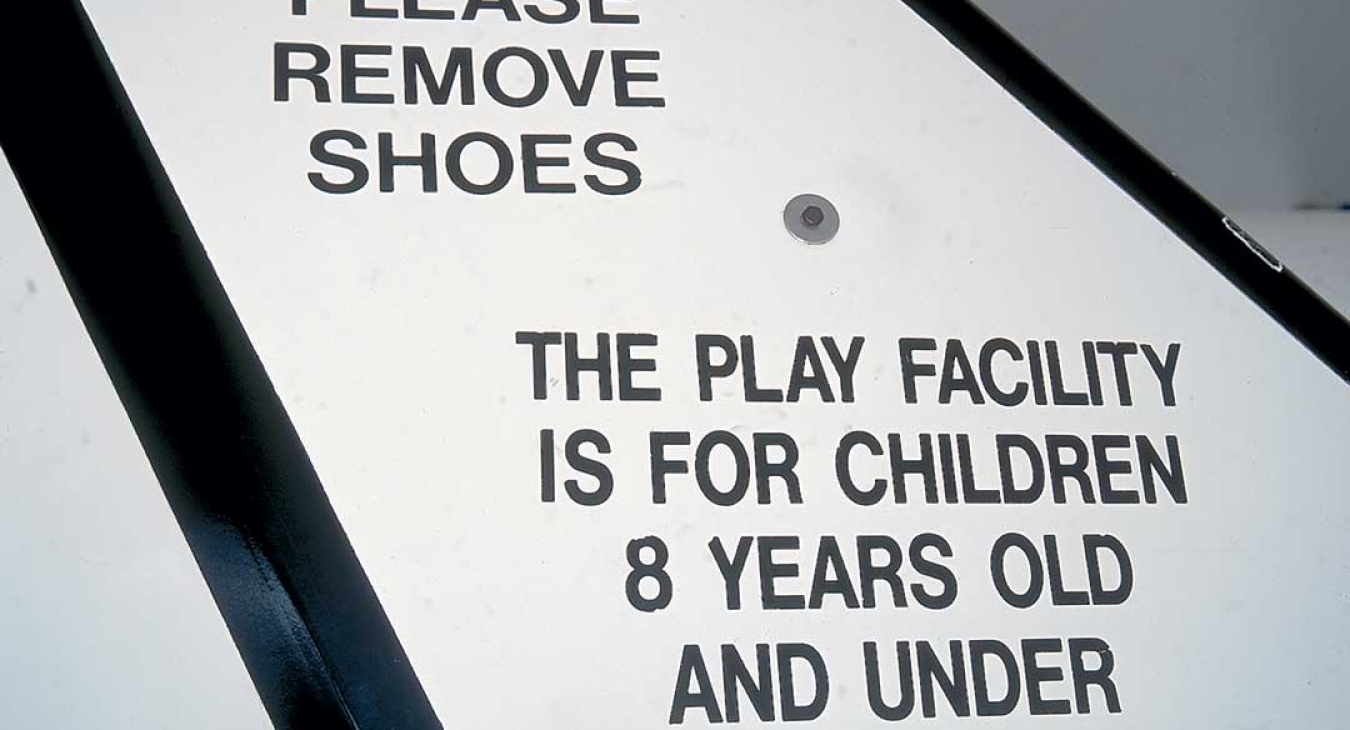
- Every public playground must clearly indicate which age group the equipment is designed for — typically ages 2–5 or 5–12. This requirement comes directly from ASTM F1487 and the CPSC Public Playground Safety Handbook.
- These labels help prevent one of the most common causes of playground injuries: children (and adults) using equipment that wasn’t built for their size, strength, or developmental ability.
- Scott often pointed out that ignoring those labels doesn’t just lead to minor scrapes — it leads to serious accidents that are entirely preventable. When toddlers climb onto equipment built for preteens, the fall heights and grip diameters alone can turn a simple slip into a broken bone. Likewise, when adults “test out” the playground equipment, they’re putting stress on structures never meant to bear that kind of load. “I’ve seen many injuries from adults playing on kids’ equipment. Age-appropriate isn’t a suggestion — it’s physics.”
- Labels make it clear who the equipment was intended for, providing operators and inspectors with documentation that the manufacturer has fulfilled its duty to warn. For parents and caregivers, those simple numbers on a sign are a quick way to ensure children are playing safely on age-appropriate play structures.
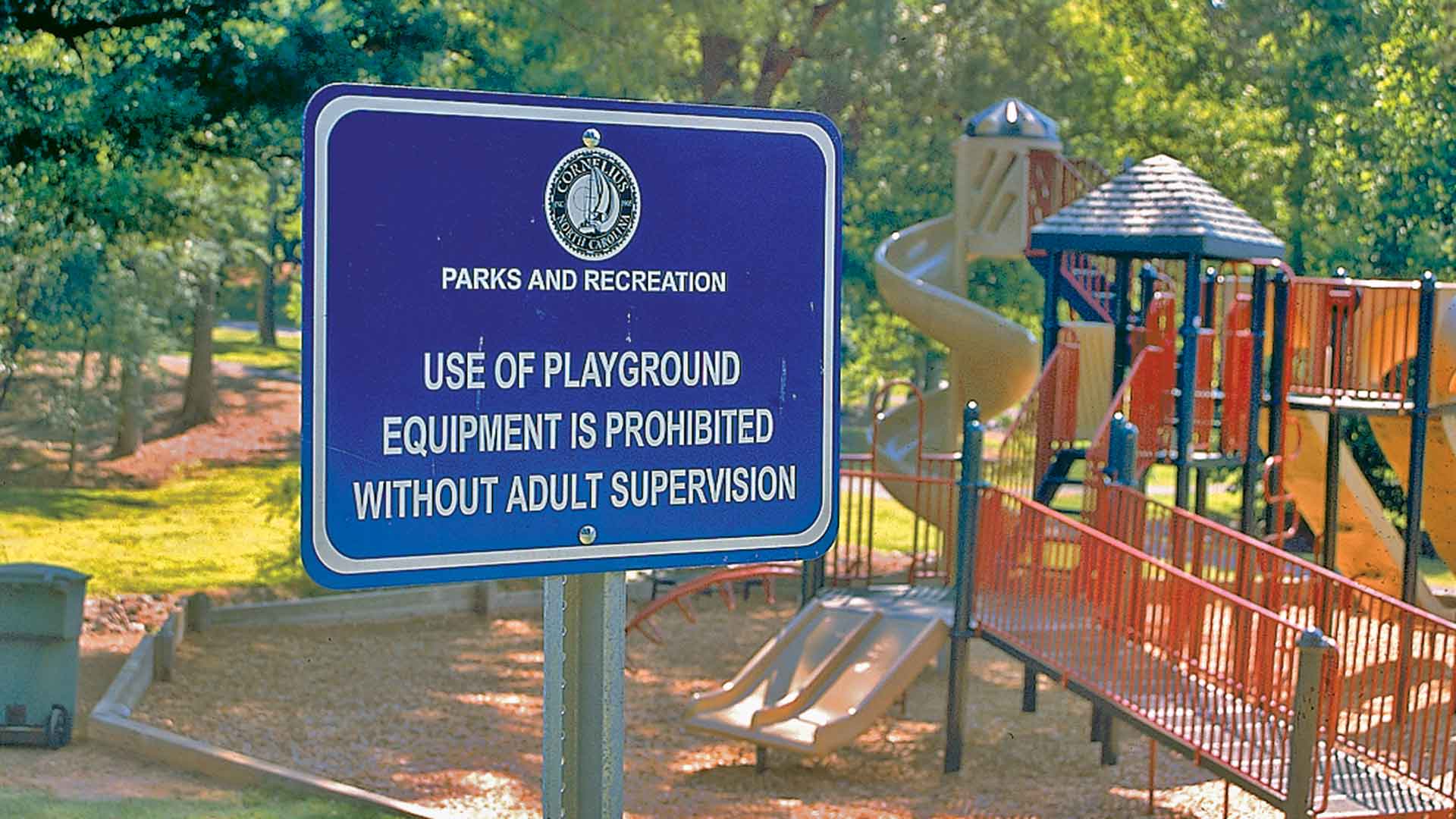
- Supervision Signs – Remind caregivers that active playground supervision is required for all children. Burton recalls, “I’ve had to send kids home more than once because the playground clearly required supervised play. Some parents weren’t too happy when they came back — but others thanked me for holding the line. Those signs aren’t there to ruin anyone’s day; they’re there because we’ve all seen what happens when kids play without an adult watching.”
- Surfacing Warnings – Identify approved surfacing materials and stress that proper depth and maintenance are required to meet impact-attenuation standards.
- Drawstring and Entanglement Warnings – Warn about clothing or accessories that can catch on equipment. The latest CPSC guidance expands this to include cords, necklaces, and similar hazards.
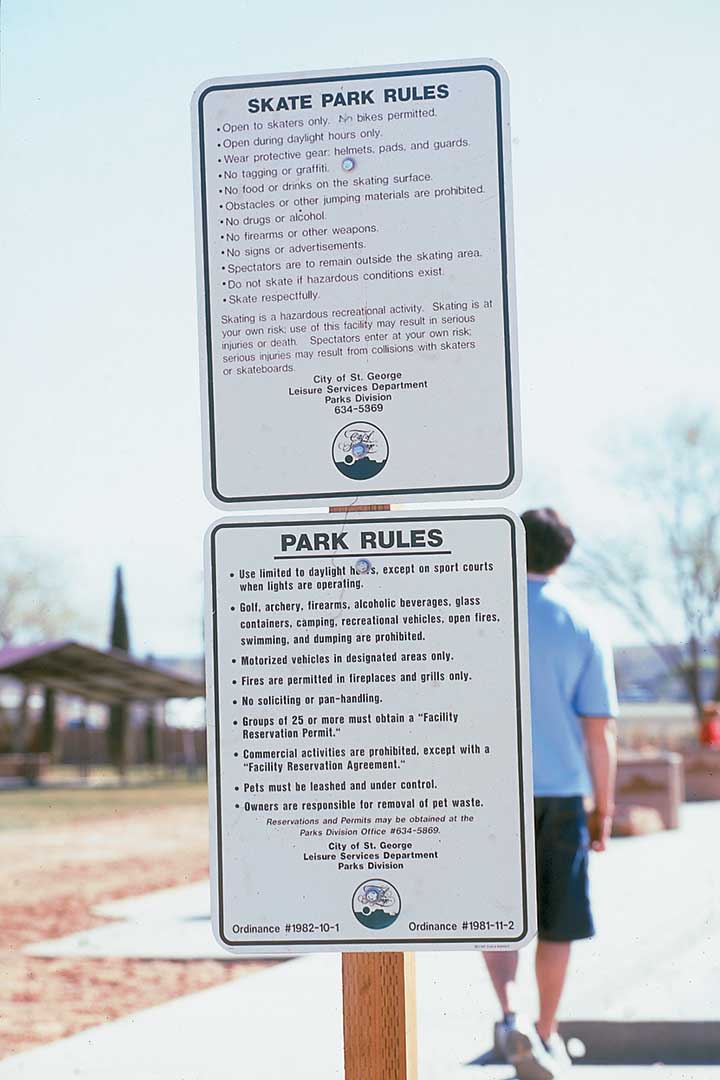
- Rules of Play – Outline safe behaviors, such as “Take turns,” “Use slides feet-first,” and “No climbing on top of structures.”
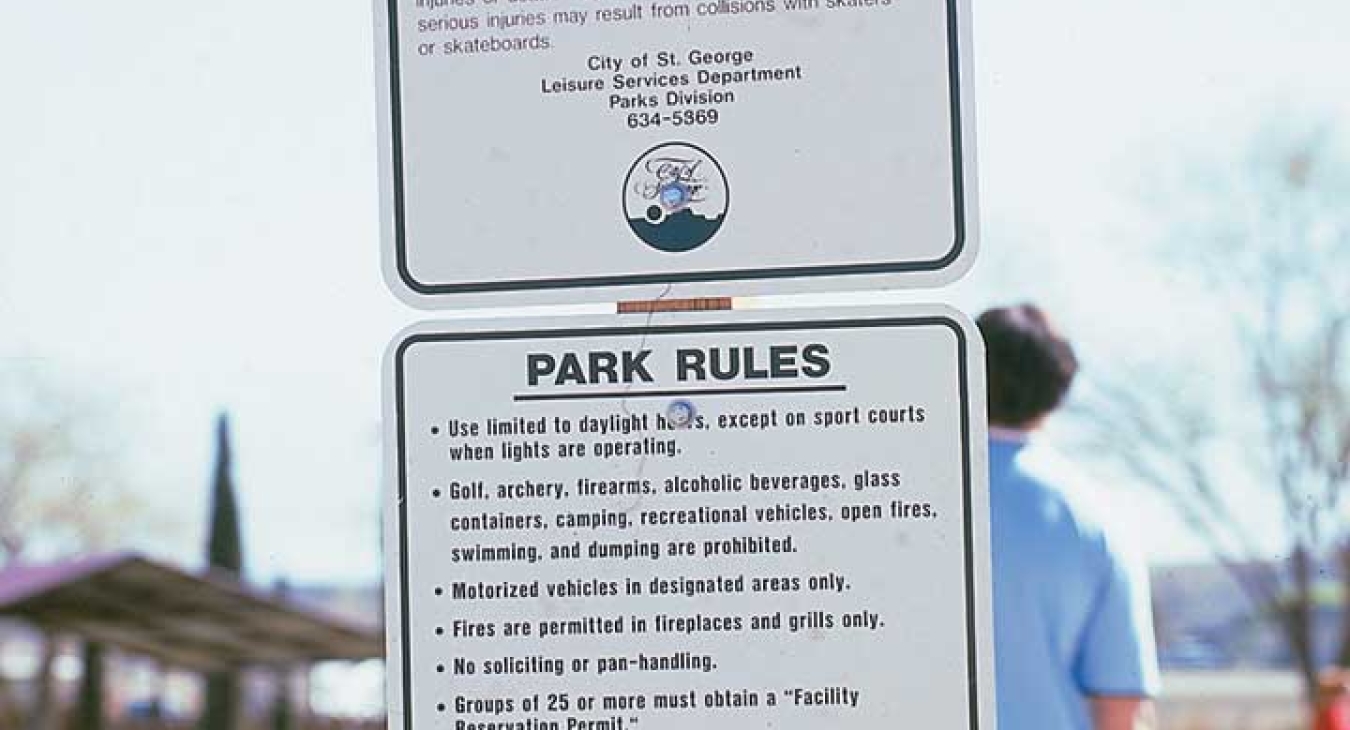
- Informational Signs - You also find signs located at the entrance to the playground that are more custom and "fun". They should contain, among other things, the following;
- Ages of the intended users
- “Adult supervision is recommended”
- Hours of operation
- How to report any damage or vandalism
- Other rules that may apply to the particular site (no dogs, drugs, drinking, etc.)
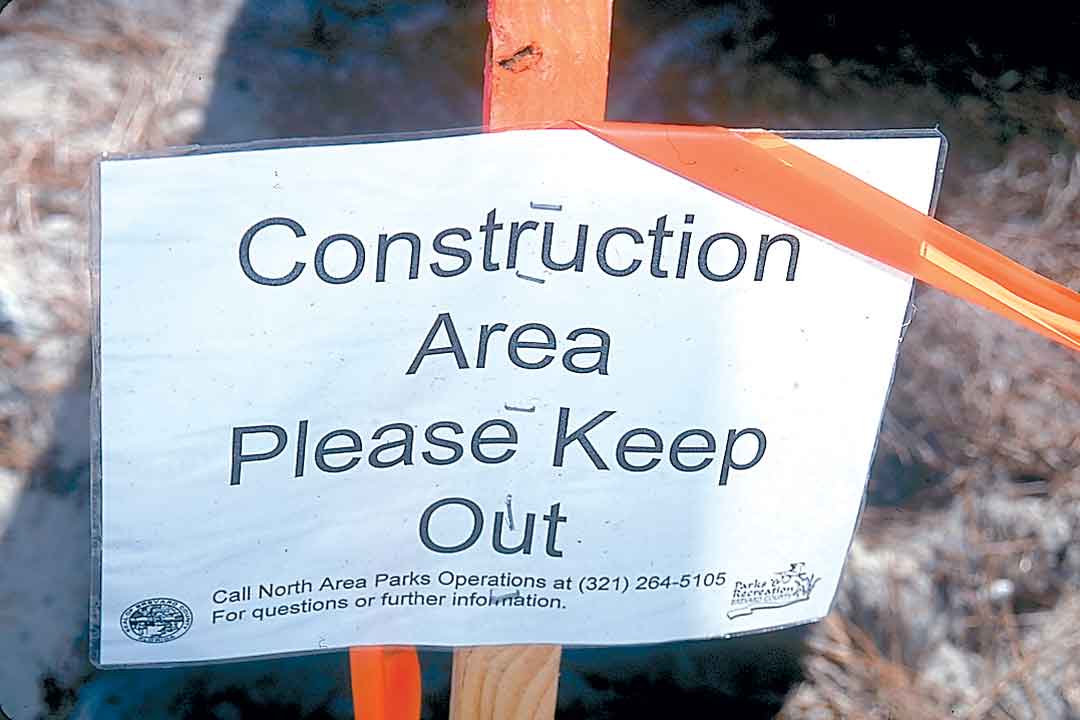
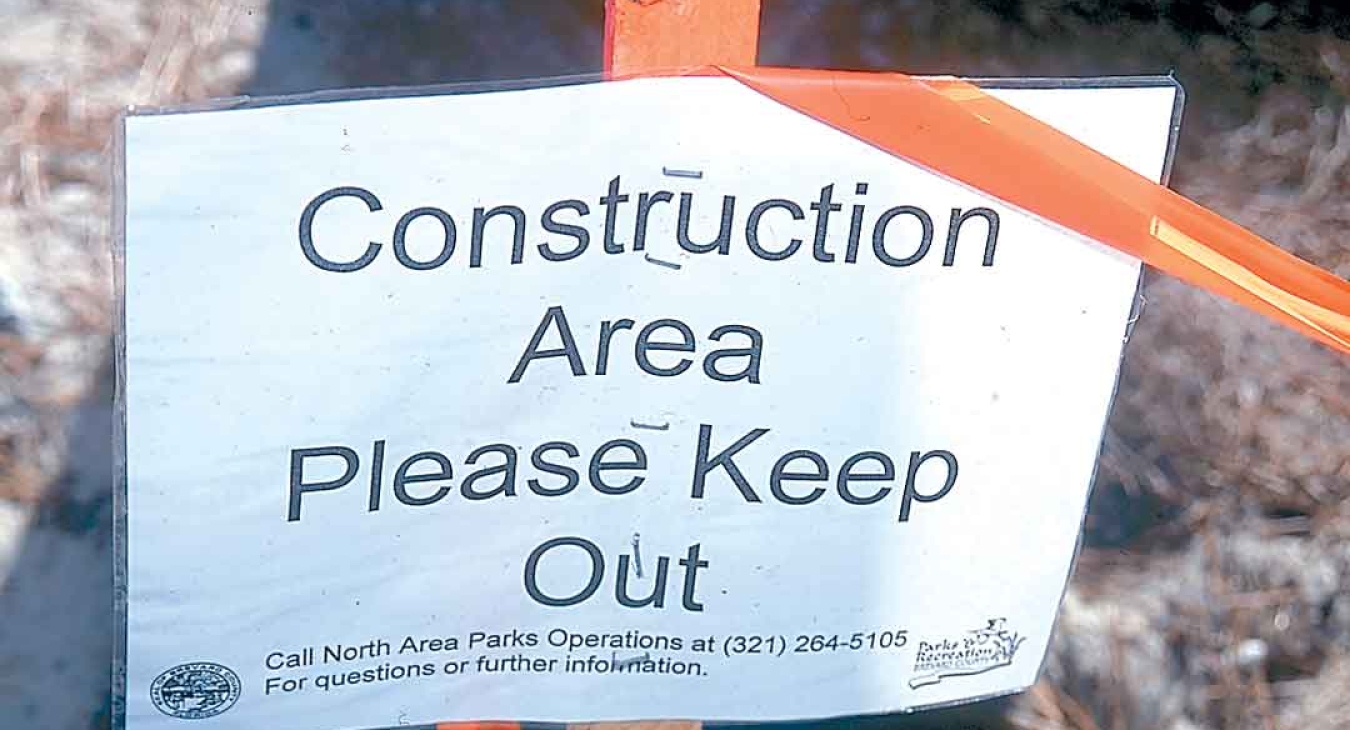
- Maintenance or Safety Inspection Notices – Provide maintenance contact information or indicate when the last inspection occurred. Burton adds, “I’ve even seen maintenance crews get creative with their signage after a few court scares — sometimes a little humor goes a long way to get attention.”
Design and Readability
Effective signage must be easy to read and understand. Follow the American National Standards Institute (“ANSI”) Z535 series for contemporary guidance on colors, symbols, letter height, and contrast. Relevant ANSI Z535 safety standards include ANSI Z535.1 for Safety Colors (2022), ANSI Z535.3 for Criteria for Safety Symbols (2022), ANSI Z535.2 for Environmental & Facility Safety Signs (2023), ANSI Z535.4 for Product Safety Signs & Labels (2023), ANSI Z535.6 for Product Safety Information (2023), and ANSI Z535.7 For a general overview of the Z535 family see the NEMA/Z535 summary page. The Z535 series provides a consistent visual language (colors, signal words, pictograms) that improves comprehension and legal defensibility for safety messages.
Can you make labels yourself? Many folks do. Most find that the new equipment they purchase already comes with new labels for free! The signs are typically panels that have to be purchased as a component, such as a barrier on a platform, or mounted to its own posts at an entrance. Labels might be torn off later, so be sure to ask for a supply of them to replace as needed.
But if you intend to make signs or labels yourself, pay attention to the ANSI standards described above. If you don’t get the sign or label details correct, you could be just as liable as if they weren’t there at all.
Placement and Visibility
Signs should be placed where caregivers and users can see them before entering or using the playground. A “three-point placement” approach — multiple locations for maximum visibility — is recommended. Mount signs between 36 and 60 inches above the ground for readability by adults while remaining visible to children.
For large composite structures, one comprehensive entry sign may suffice if it clearly identifies age ranges, surfacing requirements, and supervision needs. Burton shares, “Even the most thorough signs won’t matter if no one notices them — I’ve seen numerous structures with the surfacing warning label installed in place of surfacing level markers (at or below the surfacing level). It’s not too effective if they cannot be seen!”
Use the following as a guide for placement:
- Drawstring Warning and Adult Supervision labels can either go on every piece of equipment or at the known entrance(s) to the playground, or the 3-point placement method.
- Surfacing Warning labels must be placed onto each and every piece of playground equipment that requires surfacing.
- Age Group signs or labels can either go on every piece of equipment, at the known entrance(s) to the playground, or the 3-point placement method. *CAVEAT: be careful not to install conflicting age range signs or labels. This is more common than you might imagine.
Accessibility and Inclusion
Under current accessibility guidance, playground signage should be usable by everyone. This includes color contrast, large text, tactile or Braille where appropriate, and placement along accessible routes. Inclusive signage supports compliance and community engagement by welcoming all users.
Maintenance and Inspection
Signs must be inspected and maintained regularly. Faded, vandalized, or missing signage can reduce effectiveness and create liability. The latest ASTM F1487-25 edition recommends checking all signage during routine inspections. Burton notes, “I’ve had my share of inspections where a missing label became the headline — it’s a reminder that every sign counts.”
Creating an Evergreen Sign Program
Operators should adopt a signage program anticipating future updates. Using phrasing like “in accordance with current safety guidelines” helps signage remain accurate even as standards evolve. Keeping digital design files ensures quick updates across all signs.
Conclusion
Whether in a neighborhood park or a large municipal playground, clear signage remains one of the most cost-effective safety measures. By following the most recent CPSC, ASTM, and ANSI guidance — and learning from Scott Burton’s real-world experiences — playgrounds can remain safe, inclusive, and fun for all children.
Find out more about signage in the 2025 CPSC Playground Safety Handbook.
Add new comment