

The Problem with Playground Surfacing
Given the cost of synthetic surfacing, combined with tight budgets, many buyers are asking themselves one key question: How can we get the maximum performance from our playground surface for the longest period of time?
Typically, when we think of prolonging the functional life of anything, be it automobiles or playgrounds, the first thing that comes to mind is maintenance. In the traditional sense, the concept of maintenance revolves around what one can do after the point of purchase to ensure that a product continues to function the way it was intended. Although this traditional view of maintenance has merit, one can also view maintenance as a prior-to-purchase item.
After all, when looking up maintenance in the thesaurus, you will find words like “preserve,” “protect,” and “safeguard.” The key difference here is that post-purchase maintenance involves time and resources, while looking at maintenance as a prior-to-purchase item can often cost nothing and pay much higher dividends.
With that in mind, let’s take a look at some key elements within the evaluation process that can preserve, protect, and safeguard the performance of your playground surfacing system.
Playground surfacing is available in many different flavors. Within the synthetic category of products alone, there are tile systems, poured-in-place systems, turf systems, and many variant forms of these main categories. Evaluating the advantages and limitations of each system can be daunting and can often result in decision makers becoming lost in the cursory elements of each system, such as color, pattern, and design. Although these characteristics certainly have a role in the decision-making process, there is one key element that all surfacing systems have in common. At their very core, each system has been engineered with unique impact-absorbing properties designed to protect children from life-threatening head injuries.
If the objective of your evaluation process is to ensure that your playground surfacing remains compliant and provides consistent long-term safety, the following considerations should form an integral part of the process.
Compliance With Safety Standards
The primary function of playground surfacing is to protect children from life-threatening head injuries in the event of a fall. ASTM F1292 is the standard that applies to the impact-absorbing properties of a playground surface. In very general terms, a device similar in function to a crash test dummy is dropped onto the safety surface and sends key measurements to a computer upon impact.
The two key measurements are referred to as HIC (Head Injury Criteria) and Gmax, both relating to the ability of the surfacing system to absorb the impact of a fall. ASTM F1292 states that a surface must impart no more than 1000 HIC and 200 Gmax upon impact with the test instrument. These two critical thresholds reflect the point at which the likelihood of a life-threatening injury begins to depart from zero percent. A safety-compliant surface must perform below these thresholds at a pre-specified height for its entire service life. All manufacturers should submit a certified copy of the surface systems test reports conducted by a third-party laboratory. Test reports should indicate the fall heights and performance levels of each surfacing product being considered.
Is Complying With The Standard Enough?
Consider that the ASTM F1292 standard has been designed to prevent life-threatening and debilitating head injuries only. To illustrate this concept in real-life terms, consider that a blow to the head from a professional boxer would, on average, produce a force of 52 Gs. An occupant thrown through the windshield of a vehicle traveling 25 mph would produce an average force of 100 Gs. The current guideline for playground surfacing requires that the surface be rated less than 200 Gs.
Additionally, the performance characteristics of all playground surfacing will diminish over time. Impact-absorbing properties will decline due to aging, UV degradation, contamination with sand and dirt, as well as temperature fluctuations. If any portion of a playground surface exceeds the maximum allowable limit of 1000 HIC or 200 Gmax at any point during its service life, the playground must be fenced off until the surface can be brought into compliance either through extensive refurbishment or replacement.
In light of these factors, it makes considerable sense to evaluate surfacing systems that perform well below the maximum limits of 1000 HIC and 200 Gmax. Specifying lower performance ratings not only ensures a much safer surface initially, but also ensures that the system’s performance level will remain under the critical head injury threshold for its entire service life. A thorough evaluation will reveal products currently on the market that are providing HIC and Gmax levels far below the maximum threshold at very competitive pricing.
Manufacturers Warranties
In addition to building in a margin of safety, it is important to look carefully at the warranty offered by the manufacturer. Impact attenuation reports provided by the manufacturer are based on laboratory conditions that do not necessarily take into consideration certain factors that may be unique to your site.
To ensure performance over the long term, look for warranties that exceed the industry standard of 5 years. Several manufacturers of different types of synthetic surfacing are beginning to offer warranties of 10 years or more. Any product warranty must include a provision guaranteeing that the surface will remain compliant with the safety standard throughout the warranty period.
Verify Your Surface’s Performance Characteristics
As Ronald Reagan famously said, “Trust but verify.” Although certified ASTM F1292 test reports should be the first step in evaluating a product, these reports should not be considered the authoritative final word in relation to the performance of your installed system. The ASTM F1292 safety standard recognizes that a host of variables can affect the final performance characteristics of an installed surface.
In extreme cases, the installed surface may have no similarities at all to the laboratory test reports, which could have been completed years prior. For this reason, ASTM F1292 has included provisions for field testing. The same equipment used to evaluate surface performance in the laboratory can be used on-site to test the surface after installation. In the absence of post-installation testing, there is no way to verify that the installed surface is performing to the expectations outlined in the purchasing contract. Imagine spending thousands of dollars on a new safety surface and having no concrete proof that the surface complies with safety standards? For this reason, many purchasing contracts require post-installation testing as a critical deliverable within the contract. In response to this growing trend, some manufacturers are beginning to provide post installation testing as part of their offering.
Placing too much emphasis on specific product features that are proprietary to various surfacing manufacturers can de-emphasize the core performance characteristics of any surfacing system, which is to provide consistent long-term safety performance. Rather than specifying specific products or product features, a well-designed specification should be performance-driven.
There is no perfect playground surfacing solution. Setting high standards for safety performance and evaluating all surfacing products that are able to achieve only the highest levels of performance will ultimately result is a smarter purchase that requires less maintenance while serving the long term needs of its users.
The Solution: Rubber Tile Playground Surfacing
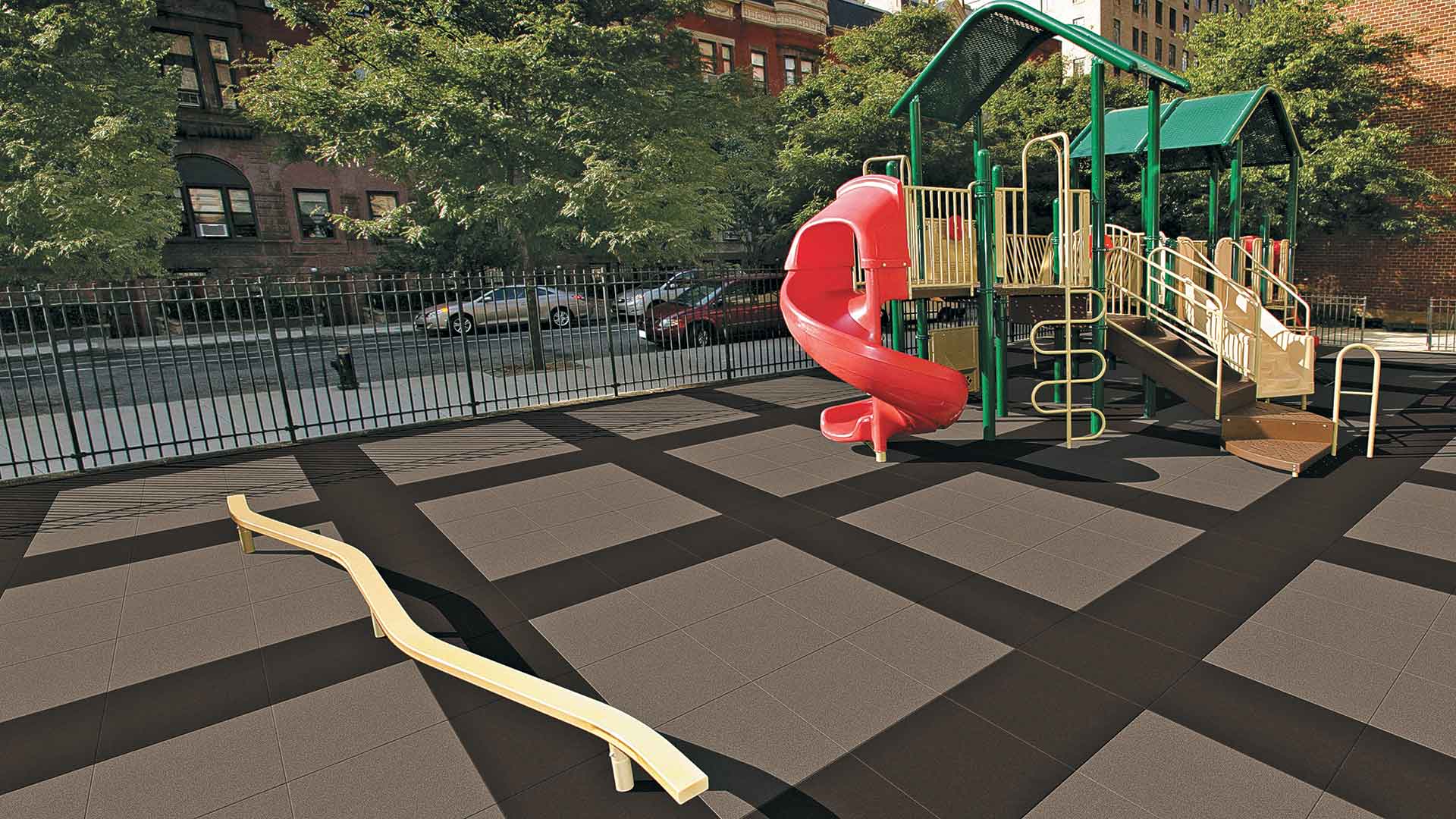
Rubber tile systems have become a popular and reliable choice for playground surfacing, combining durability, accessibility, and safety in one modular design. Unlike poured-in-place surfacing, rubber tiles are prefabricated squares — typically 2’x2’ or 2’x4’ — made from recycled rubber bonded with polyurethane. Beneath each tile, a rubber mesh or waffle-style underlayment allows for drainage, flexibility, and consistent impact absorption.
Safety and Compliance
One of the key advantages of rubber tile surfacing is its ability to deliver consistent impact attenuation that meets or exceeds ASTM F1292 standards. Because each tile is factory-molded under controlled conditions, the finished system provides uniform safety performance across the play area. This makes rubber tiles especially appealing for playgrounds where precise fall height ratings and compliance documentation are critical.
Design and Aesthetic Options
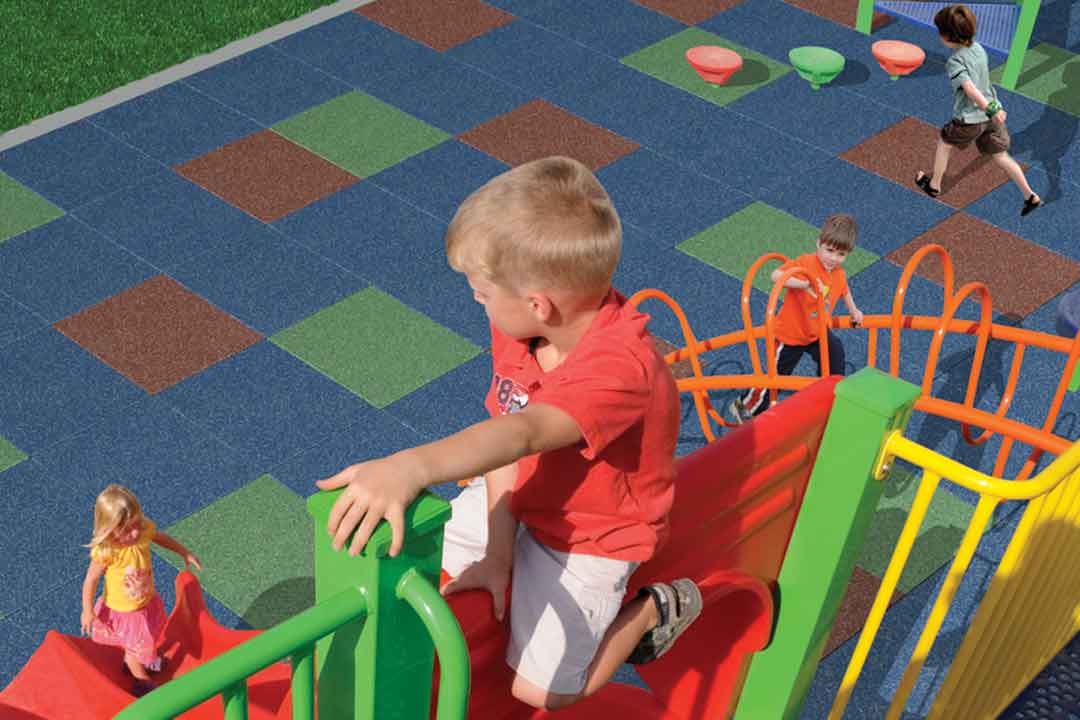
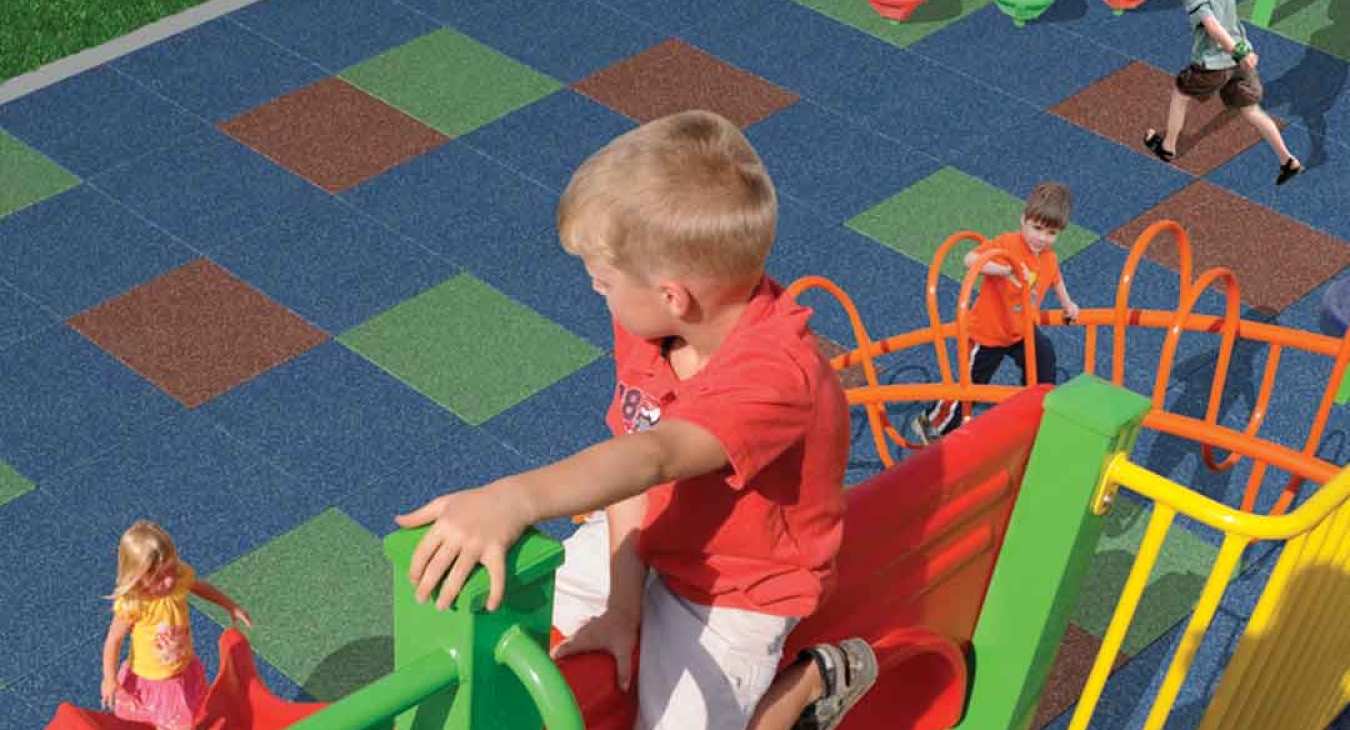
Rubber tiles come in a wide variety of colors and thicknesses, allowing designers to create visually appealing patterns and define zones of play or accessibility. The clean, geometric layout lends itself well to modern park designs, school courtyards, and rooftop play areas. While color and texture options are somewhat more limited than seamless surfacing, tile systems still offer plenty of room for creative expression.
Installation and Maintenance
Rubber tiles are typically installed over a hard, level sub-base such as concrete or asphalt, using adhesive and alignment dowels to create a tight, uniform surface. Proper base preparation is essential — uneven ground or poor drainage can lead to gapping or lifting over time.
Once installed, maintenance is straightforward. Damaged or worn tiles can be replaced individually without removing the surrounding surface, keeping repair costs manageable. Regular cleaning and inspections help maintain both aesthetics and safety performance.
Longevity and Performance
A well-installed rubber tile surface can provide 10–15 years of dependable service, depending on climate and usage. The resilient rubber composition offers excellent resistance to wear, UV exposure, and temperature extremes. For high-traffic playgrounds or facilities looking for a long-term investment in safety and sustainability, tile surfacing provides an excellent balance of performance and practicality.
Sustainability and Environmental Impact
Most rubber tiles are made from recycled materials, such as post-consumer tires, giving them a strong sustainability profile. Many manufacturers also offer cradle-to-cradle recycling programs, allowing worn tiles to be collected and repurposed into new surfacing materials.
Conclusion
Rubber tile surfacing offers a clean, durable, and accessible solution for playgrounds of all types. With proper installation and maintenance, it provides dependable safety performance, design flexibility, and long-term value. For parks, schools, and recreation facilities seeking a balance between form, function, and safety, rubber tiles remain one of the most proven surfacing systems available today.